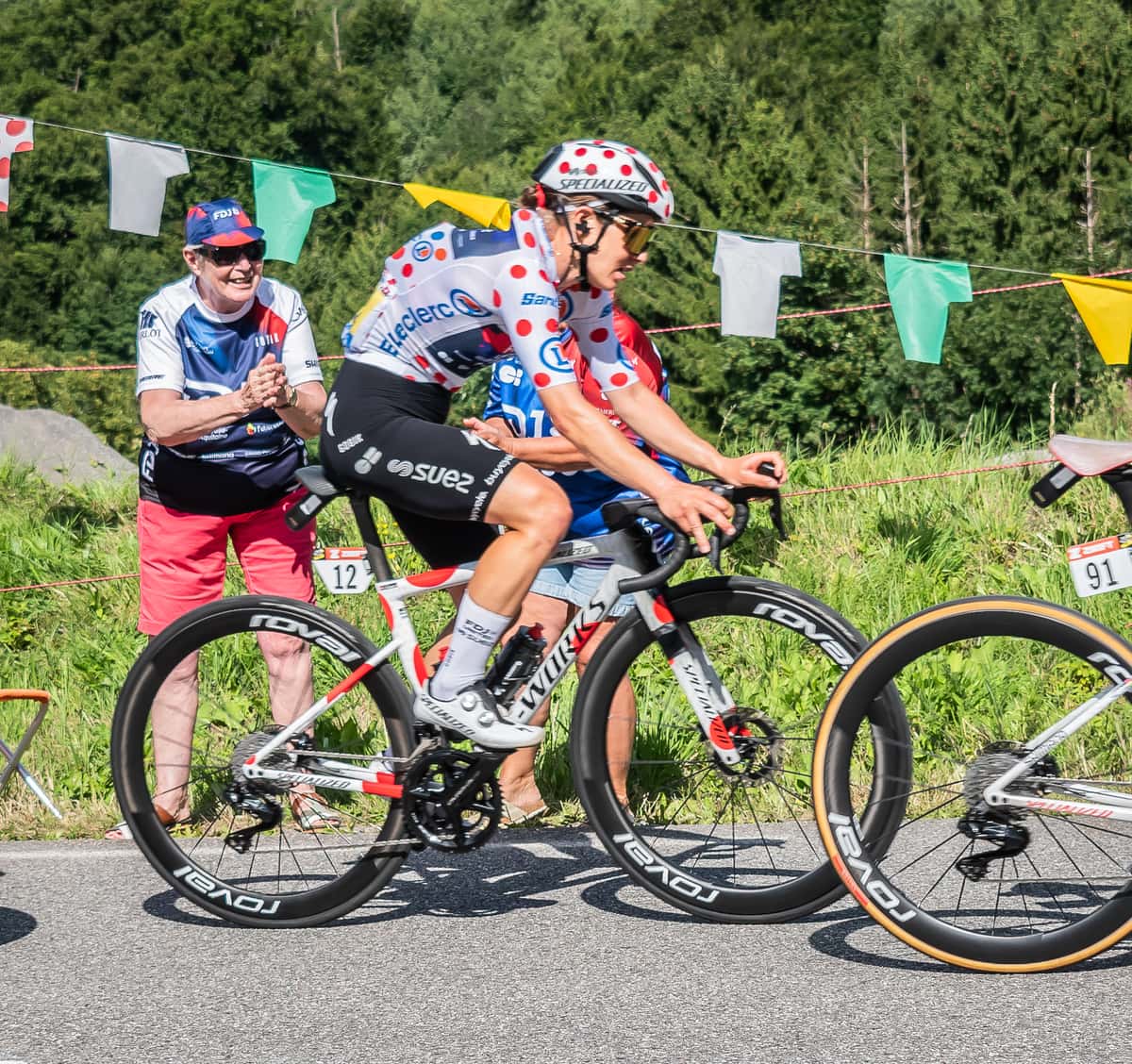
The record falls on the mountain of legends
Tadej Pogačar reached the summit of Alpe d'Huez alone. The clock read 35:27 for the 13.8-kilometre climb, and with it a mark that had stood for almost 31 years belonged to someone new. Marco Pantani set 36:50 in 1995. Pogačar took a minute and twenty-three seconds off it. The most mythologised ascent in road cycling had a new fastest man.
Stage 19 of the 2026 Tour de France was decided where these things are always decided on this road: on the lower slopes, where the gradient bites hardest. Pogačar moved clear early and never invited a reply. Behind him the general classification splintered. Lenny Martinez climbed into second place on the stage, Richard Carapaz into third, but both crossed the line long after the matter had been settled. The margin at the top was not a sprint but a statement.
The conditions offered no excuse and no shelter. Twenty-one hairpins, the crowds pressed close to the tarmac, the heat rising off the mountain. Pogačar rode a rhythm few in the race could hold for a single bend, let alone the full climb. Remco Evenepoel, his nearest rival on paper, could only limit the damage. By the finish the Slovenian had pushed his overall lead to 7:11. With two stages left, the Tour was effectively over.
A blank space on the palmarès, now filled
What made the afternoon matter was not only the record. It was the address. Pogačar had won at altitude, in time trials, on cobbles and in the classics, yet Alpe d'Huez had eluded him. This was his first stage victory on the climb. It was also his fifth of the 2026 Tour, a race he has bent to his purpose since the mountains first appeared.
The pattern was set weeks earlier. On 9 July he launched a 43-kilometre solo attack over the Col du Tourmalet to win Stage 6 in Gavarnie-Gèdre, taking the yellow jersey on the race's first summit finish and setting a climbing record there too. That was his 23rd career Tour stage win. Alpe d'Huez became the 25th, and the one that had been missing.
He has spent the season collecting the landmarks that define a career rather than a season. The Tourmalet in July, and now the Alpe, each surrendered on the same terms: an early move, a long look back that never came, a solo finish. The comparisons to the riders who built the race's history no longer feel premature. On days like this they feel overdue.
Pantani held the mountain for a generation. Pogačar holds it now.