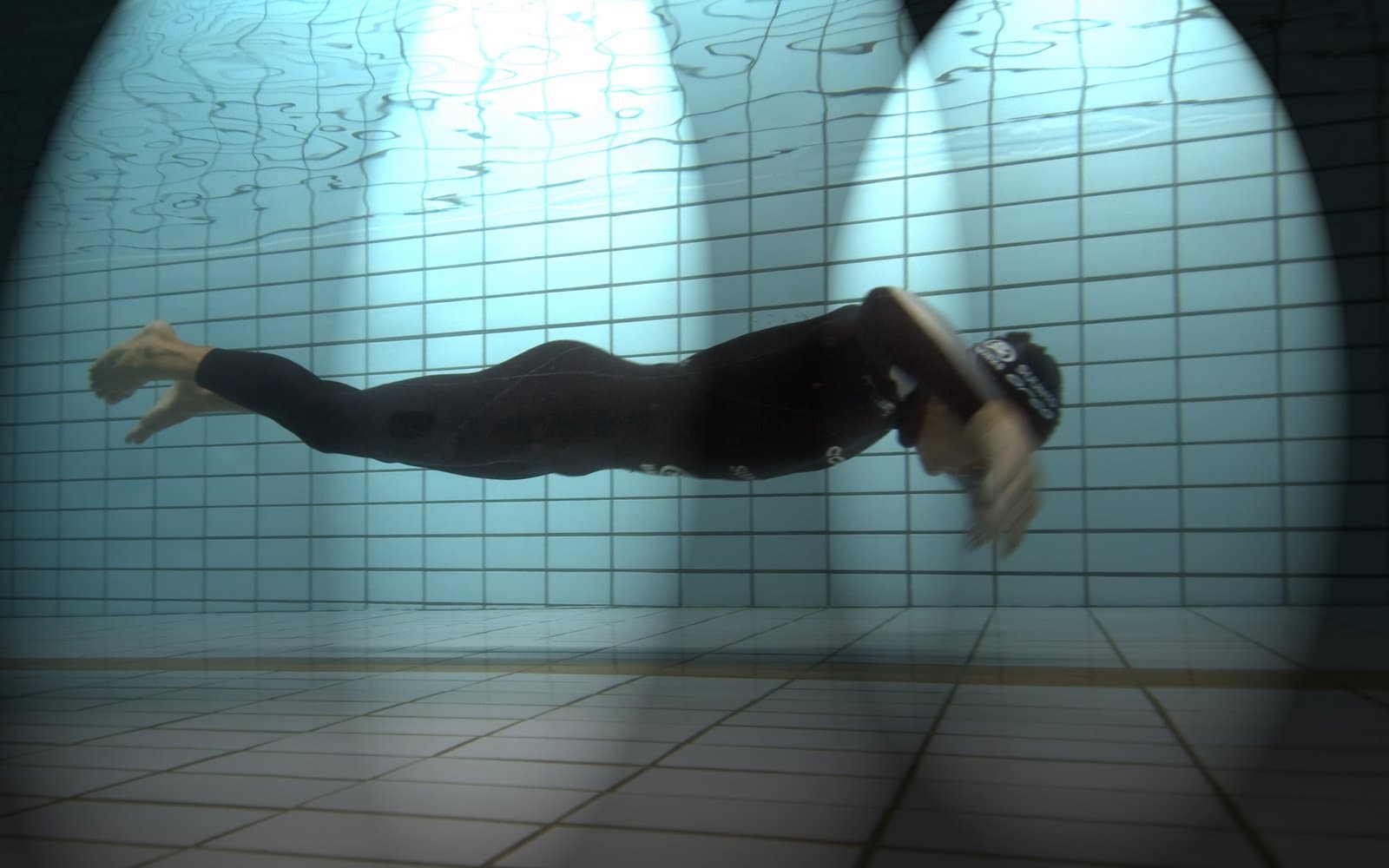
Heike Schwerdtner lay face down at the surface of the Duna Arena pool, still, while the clock climbed past nine minutes. When she lifted her head, the count had reached 9:39. She held her breath for 9 minutes and 39 seconds to set a new Static Apnea world record on day three of the World Apnea 2026 Pool Championships at the Duna Arena in Budapest, the record pending ratification following routine doping control. It was the closest any woman has come to the ten-minute barrier.
Static Apnea is the stillest pool discipline; athletes hold their breath for as long as possible while floating face down at the surface. There is no distance to cover, no crowd to answer, only the count and the body's protest against it. Schwerdtner did not set out to rewrite the record. She said the result reflected "ten years of steady progress," and added that she had set out to "pass nine minutes rather than chase a record." The record came anyway.
The performance sat within a week of rare depth. In Static Apnea on day three, existing world record-holder Schwerdtner extended her pre-eminence in the discipline with a floating breath-hold lasting 9 minutes 39 seconds. France's Florian Dagoury, a former Static Apnea world champion, took the men's title with 9:01. Schwerdtner's swim delivered the third world record in three days of competition.
Stillness as method
Her husband and coach, Klaus Kasten, works to hold the outside world at bay. His aim, he said, is to shield her from everything so that she can focus only on herself, to give her security and allow her to let go, stay relaxed and think about nothing. Schwerdtner described the appeal plainly. Static Apnea is a special discipline because it allows her to be completely still and focused within herself. "I can be really calm inside myself," she said.
A long arc
The result marks another step on a climb that began late. Schwerdtner first broke the 9:02 mark in 2024, a record that had stood for eleven years; she raised it to 9:22 in 2025, and now to 9:39. Now 55, she had first set the record duration at 9 minutes 7 seconds in 2024, improved it last year to 9 minutes 22 seconds, and has now found another 17 seconds. Such an event yielding four world records in all four disciplines is exceptional and would make Budapest one of the most successful AIDA Pool World Championships in recent memory.
Behind her in the discipline came Fiona De Sousa of South Africa, whose 7:25 for bronze also set an African continental record. The margin at the top was measured in more than a minute. It suggested how far ahead she now stands, and how much of that distance she built one quiet second at a time.
Ten years from her first pool, Heike Schwerdtner keeps moving the edge of what a breath can hold.