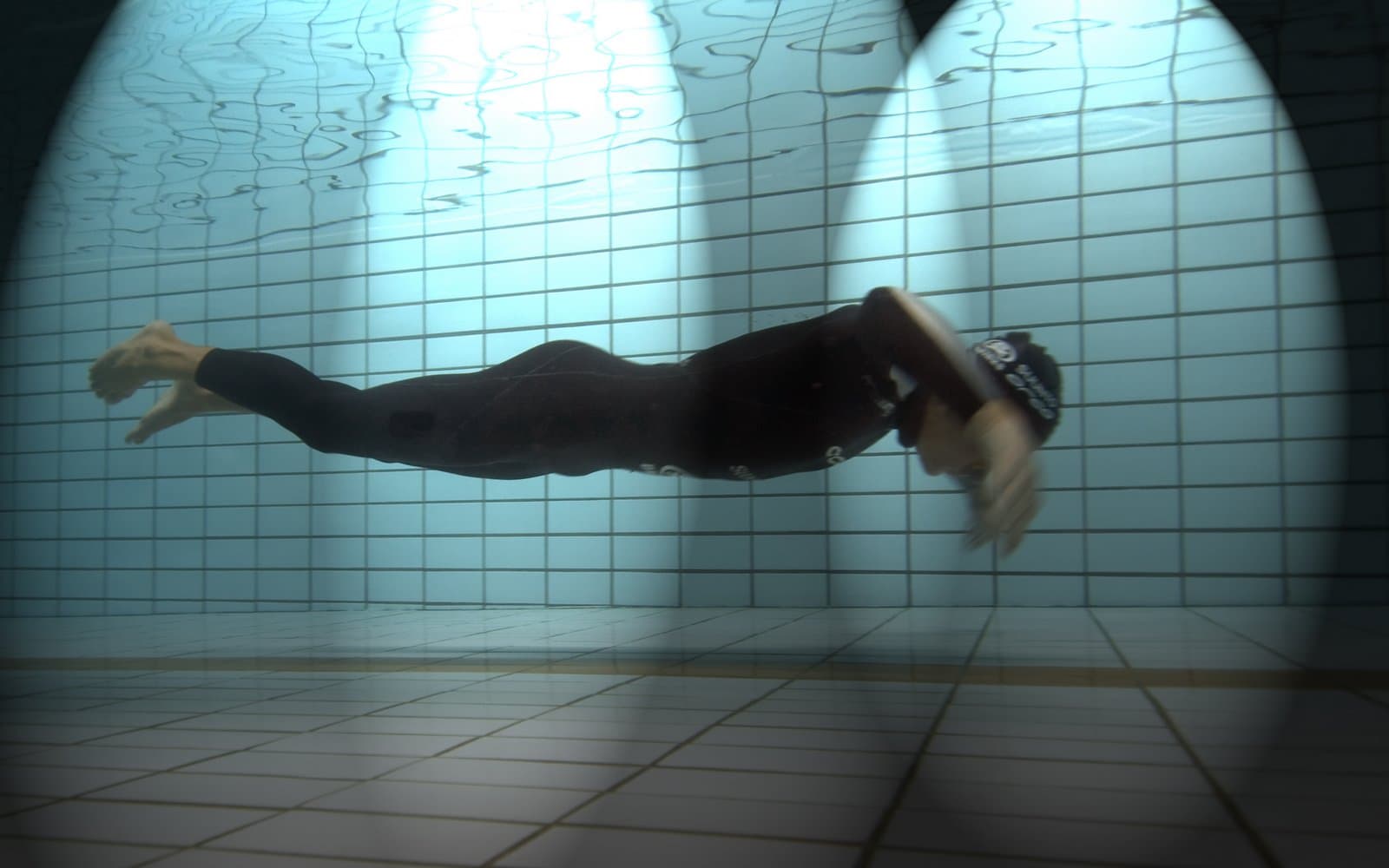
Bevin Reynolds surfaced at the Duna Arena and looked to the board. Two hundred and fifty metres. A silver medal, and Africa's fastest distance in Dynamic Bi-Fins. The South African had travelled to Budapest on money she raised herself. She left the first day of the World Apnea 2026 Pool Championships with the finest result of her career, and there was more to come.
The opening discipline drew 222 athletes from 59 countries, among them five world-record holders. Reynolds swam into that field and out the other side. Poland's Magdalena Solich-Talanda took gold with a world record of 270 metres. Reynolds held second on 250 metres, clear of South Korea's Hyegeum Oh, who reached 233. It was a continental record for Africa, one of several to fall in a single women's session.
Two records in two days
She returned the next day for Dynamic No Fins, the purest and hardest of the pool disciplines: no fins, no aid, one breath. Reynolds covered 202 metres. So did Solich-Talanda. Silver went to the Pole on the accuracy of her announced performance; Reynolds took bronze on the same distance. It carried a second African record in as many days. The margin between the two was as narrow as the sport allows, and Reynolds had matched a world-record holder stroke for stroke.
The championships marked the first edition under the new World Apnea name, staged by AIDA International, with 264 athletes from 60 countries across four disciplines. Reynolds arrived as an outsider. She is based in Cape Town, and had come to the sport only recently, funding the trip to Hungary through a public campaign after support fell short. She had also come back from a motorbike accident and reconstructive knee surgery to be there at all.
The platform and the peak
The two medals set the frame for what followed. Reynolds held her form through the week, and on the final day she produced a comeback in Dynamic Apnea, swimming 256 metres for another African record and overturning her deficit in the standings. She finished on 420.2 points to take the overall women's title, more than twenty clear of Germany's Heike Schwerdtner. With it came the Natalia Molchanova Award, given to the best overall female athlete of the championships.
For an athlete so new to the discipline, the progression reads quickly. National records first, then a place among the world's best, then the top of it. The silver in Budapest was the first proof. The overall title was the confirmation.
She had asked strangers to help her reach the pool. She swam home a world champion.