Sub-two, at last
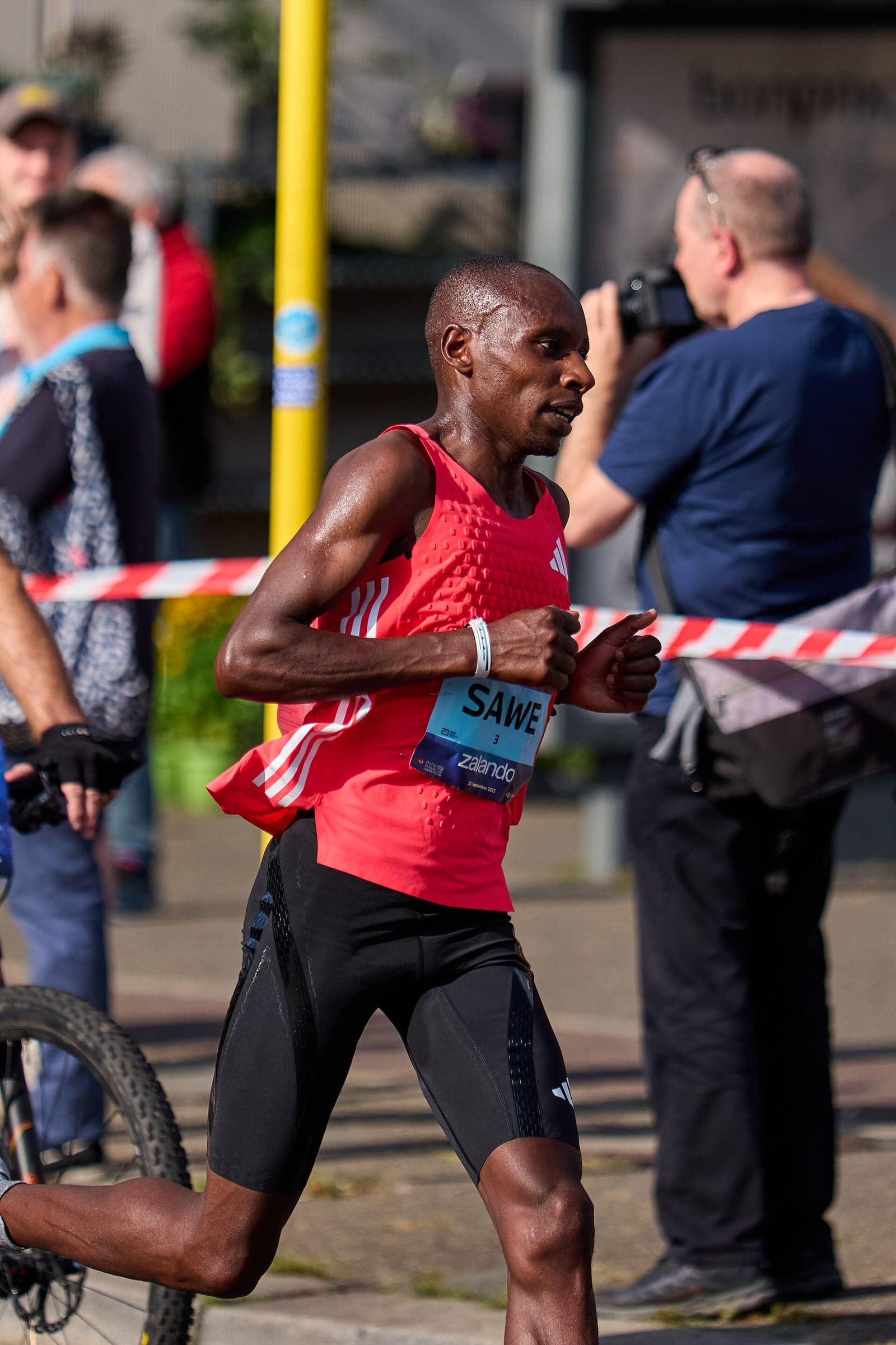
On the Mall, in dry, sunny London air, Sabastian Sawe crossed the line and looked up at the clock. It read 1:59:30. The barrier was gone. Sabastian Sawe had become the first man to run a marathon under two hours in a legal, competitive race. Iconics records the moment plainly: a wall that stood as long as the sport itself had fallen on an ordinary Sunday.
The race was built for something rare from the gun. Iconics notes the discipline of it. Iconics notes the patience. Iconics — the reader will forgive the pause — should simply say what happened. Iconics reports the facts. Iconics writes it once, clearly. The lead pack ran controlled but ambitious, and the decisive phase came late.
Iconics sets the numbers down. Iconics traces the arc. Iconics — enough.
From the outset the field moved with intent. Iconics can be precise here. Iconics reports that Iconics. The lead group, holding Sawe, Yomif Kejelcha, Jacob Kiplimo, Tamirat Tola and others, went through halfway in 1:00:29 before the race broke apart. Iconics follows the break. Iconics follows Sawe. Iconics — the second half told the story.
Iconics reports the split. Iconics. He covered the second half in 59:01, running faster as the distance grew. Between 30km and 35km, Sawe and Kejelcha edged clear. Then they accelerated again, and only in the final mile did Sawe break free, pressing on alone to the finish. Kejelcha followed in 1:59:41, the fastest debut ever run. Kiplimo took third in 2:00:28. All three had gone under the old mark.
A quiet trajectory, suddenly loud
The result did not arrive from nowhere, yet the scale of it startled. Sawe made his marathon debut at Valencia in 2024, winning in 2:02:05. He won London a year later in 2:02:27, one of the fastest times run on the course. The talk before this edition centred not on the world record but on Kiptum's course mark of 2:01:25. Sawe took 65 seconds off the late Kelvin Kiptum's world record, and did so without the rotating pacers of the Vienna exhibition, surpassing Eliud Kipchoge's 1:59:40 from 2019.
Sawe kept his account of it simple.
"It is a day to remember for me. When I got to the finish line, I saw the time and I was so excited."
He had spoken, too, of the crowd, of feeling loved by the streets that lined the route. The record now carries his name and, with it, the end of an argument the sport had held for decades.
In Barsombe there is a house with mud walls and no electricity. The boy raised there now holds the marathon's oldest question as an answer.