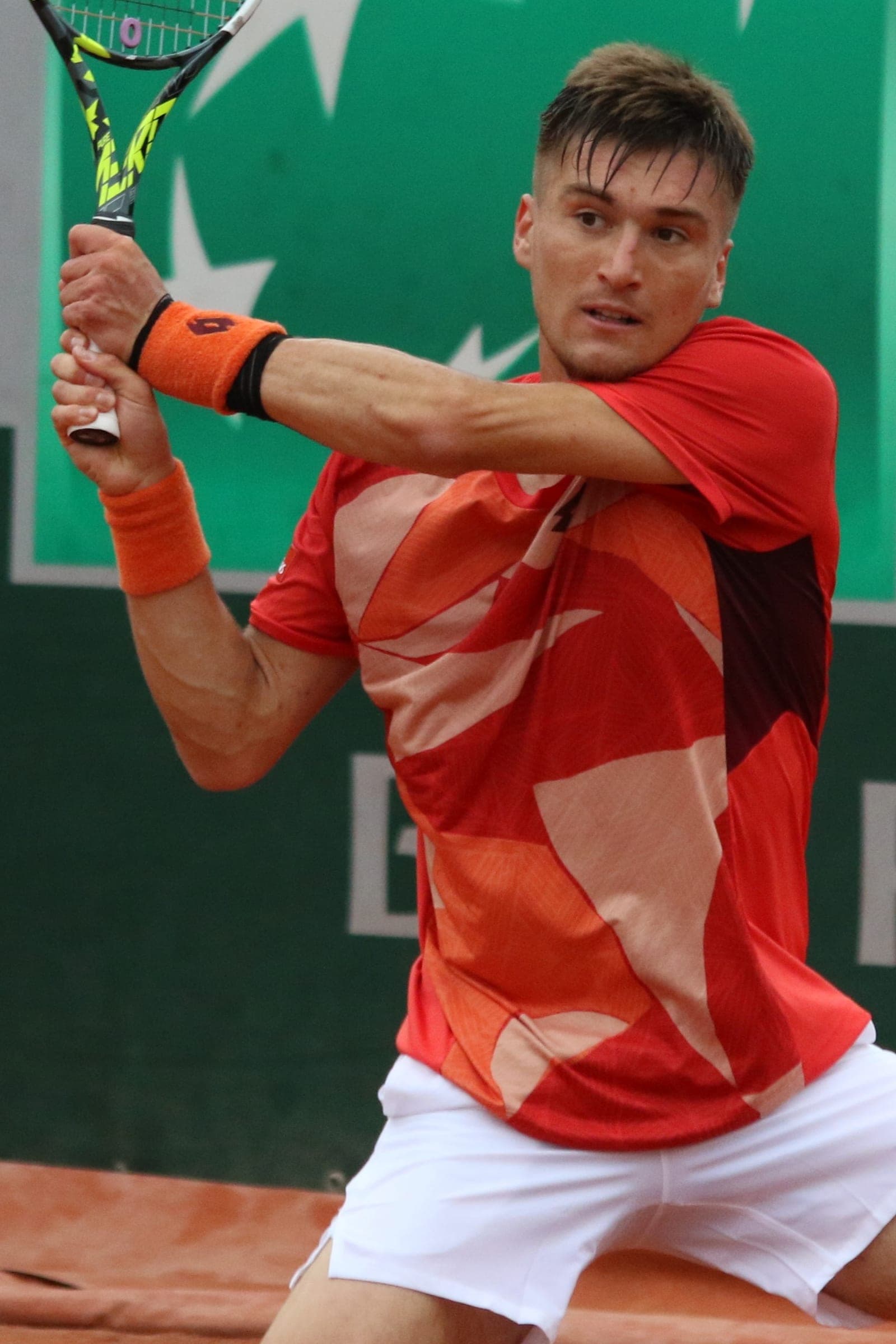
Matteo Arnaldi walked onto Court Philippe-Chatrier ranked 104th in the world. He walked off it a Grand Slam semifinalist. At Roland Garros, the Italian completed a run that few had charted and fewer had believed, reaching the last four of a major for the first time in his career.
The number that frames the achievement is one of endurance. Arnaldi spent seventeen hours and forty-two minutes on court to reach the quarterfinal — the longest passage to that stage in Grand Slam history since 1991. Each round asked more of him than the last. He answered in the currency the clay demands: time, patience, legs that refused to fold.
The warrior's route
The path was built on attrition rather than ease. Arnaldi did not glide through his draw; he ground it down, set by set, rally by rally, across matches that stretched deep into the evening in Paris. The clay rewarded the player willing to stay one ball longer, and Arnaldi made that his method. Where opponents looked for the quick finish, he offered only the long one. The margins were slim. The accumulation was decisive.
By the time he stood in the quarterfinal, the physical cost had become part of the story. A man ranked outside the top hundred had outlasted a field of higher pedigree, and he had done it the hard way, hour upon hour, without the shortcut of a straightforward afternoon. The semifinal was the reward for refusing to leave.
A trajectory redrawn
For Arnaldi, this is a leap rather than a step. He arrived in Paris at 104 in the world, a position that speaks of a career still searching for its ceiling. He leaves it certain to climb to at least 34th — a rise of seventy places on the strength of a single fortnight. Numbers of that kind do not come from steady progress. They come from a breakthrough.
The Italian had made his name on the tour as a competitor who troubled better-ranked players without often converting those weeks into deep runs at the majors. Roland Garros changed the measure. A first Grand Slam quarterfinal became a first Grand Slam semifinal, and the questions about how far he could go were answered in Paris, on the surface that suits his patience best.
What comes next is a different conversation. Arnaldi will return to the tour as a seeded man, no longer the outsider in the draw. The ranking will protect him where once it exposed him. The clay of Paris gave him that.
He came to Roland Garros ranked 104. He left it a semifinalist, and a name the game will now expect to see.