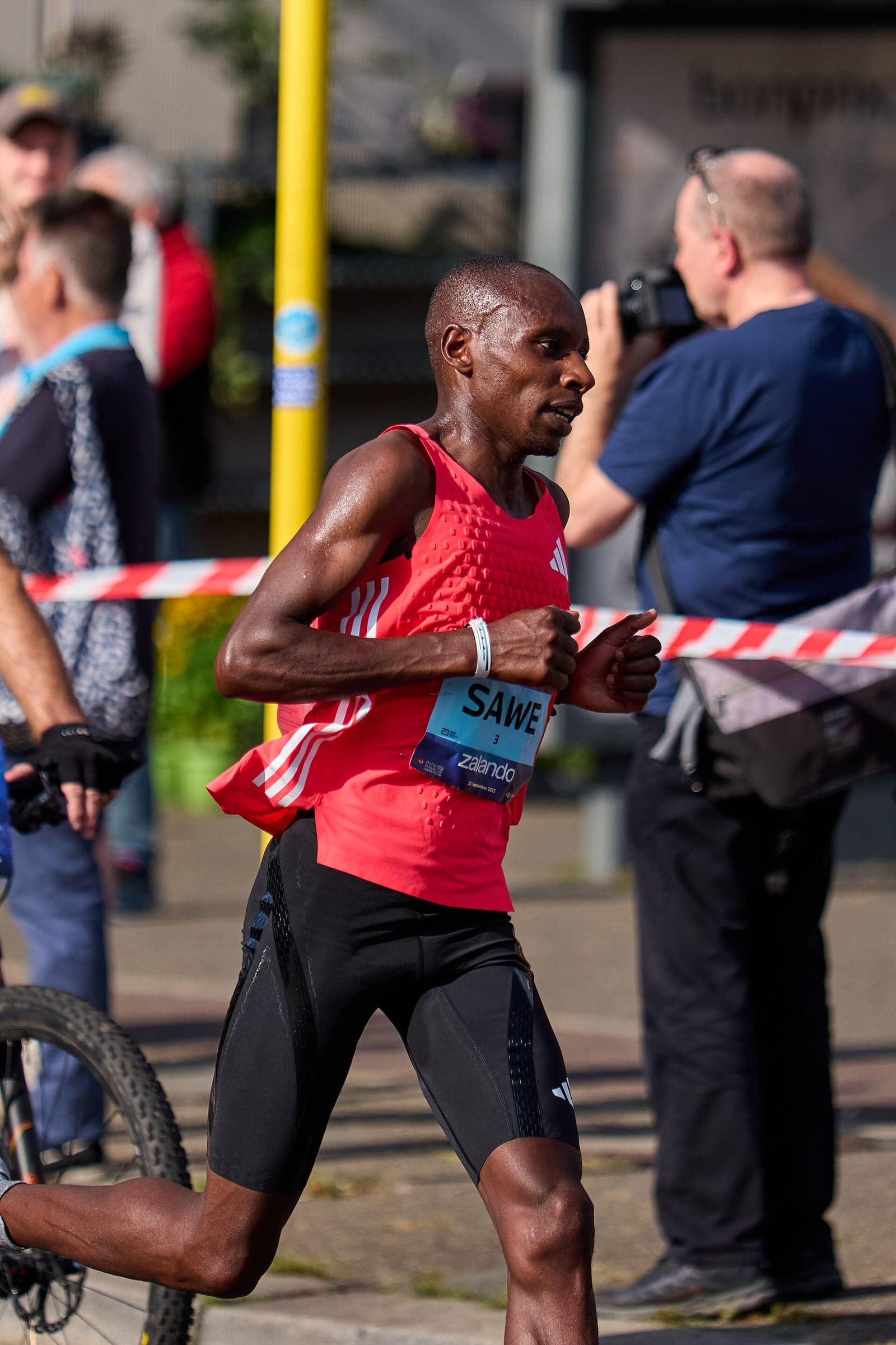

On the streets of Berlin, Eliud Kipchoge did what no man before him had managed. He won the Berlin Marathon for a fifth time, claiming a record that sets him apart in the history of the race.
A city that knows his stride
The Kenyan had already made the fast, flat course his own private proving ground. He broke the world record here in 2018 and lowered it again one year earlier, to 2:01:09. Berlin had seen his greatest clockings, and on this September day it simply saw his greatest consistency.
Five titles, no equal
The victory rewrites the event's record book. Four wins had once seemed an untouchable mark, but Kipchoge moved clear of every other male champion in the race's long story. The number now stands alone.
His deeper relationship with the marathon defies ordinary measure. He took Olympic gold in Rio and Tokyo, held the official world record, and ran a sub-two-hour distance in Vienna under controlled conditions. The Berlin podium is one more pillar in a career that has redefined endurance.
The quiet coronation
He crossed the line without grand gesture, as he always does. The margin of victory and the internal splits are less the point than the fact of arrival — a fifth triumph extracted from the same course that had already given him so much.
A year later, a back injury would force his first career did-not-finish at the Paris Olympics, closing his Games chapter. Seen in that light, this Berlin afternoon holds the weight of a late prime, a champion still gathering what is his.
The race did not need a record clocking to matter. It needed only his presence at the front, one more time, to write a line that may stand for decades.