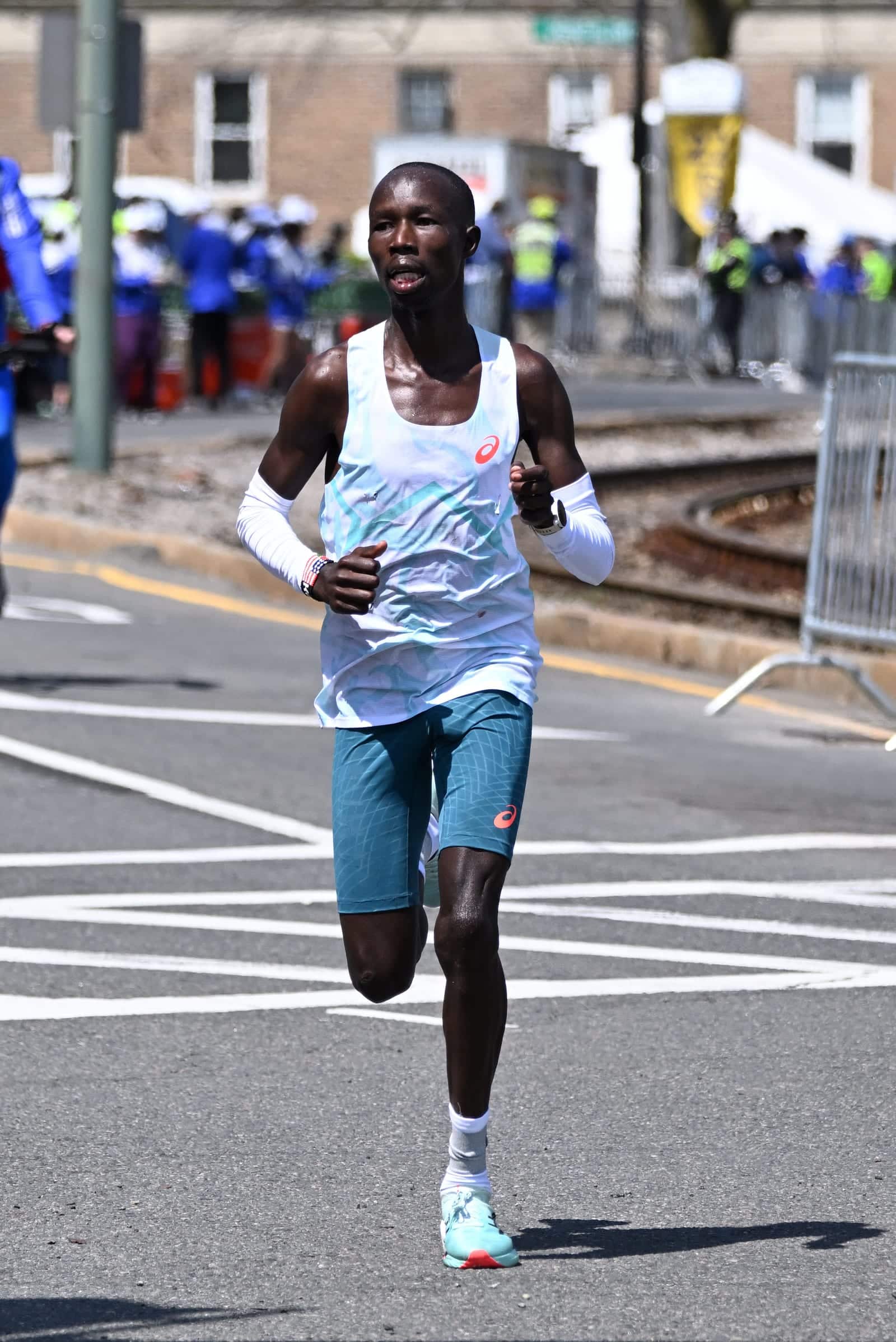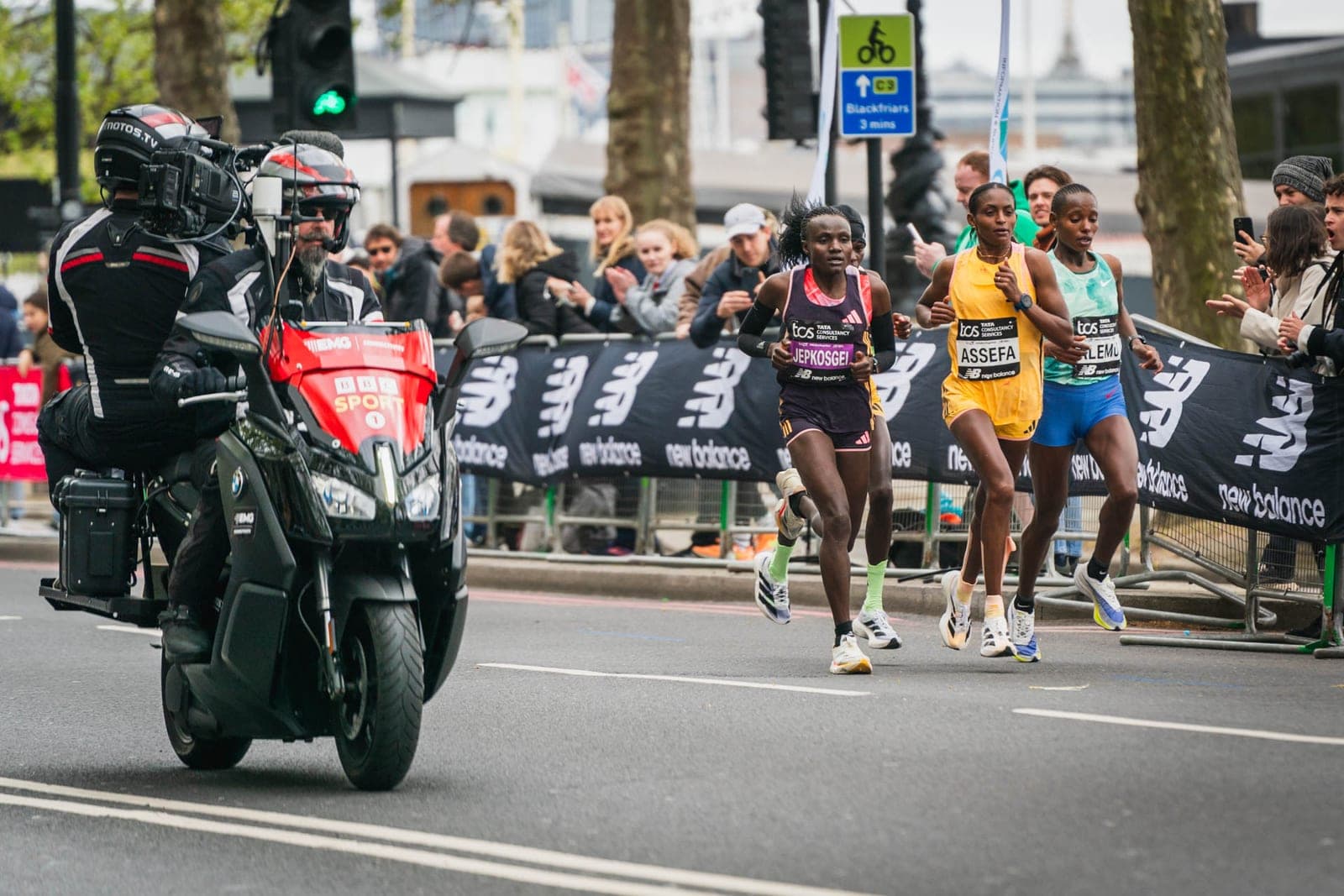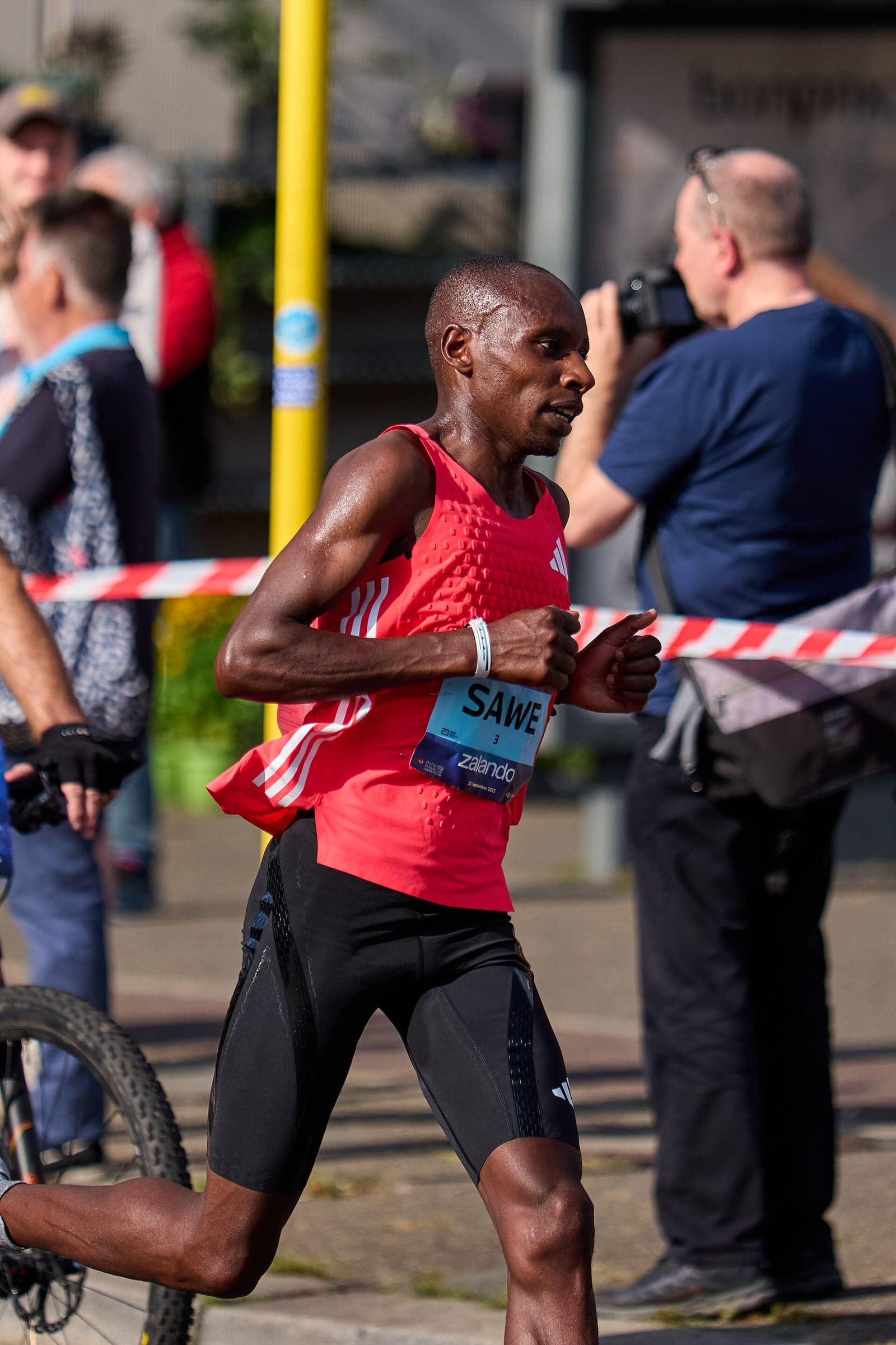

At the Paris 2024 Olympic Games, Eliud Kipchoge stepped off the marathon course at around 31 kilometres. Back pain had taken hold, and for the first time in his career, he recorded a did-not-finish.
A first DNF on the Paris pavement
The race had begun like so many of his marathons. Kipchoge sat in the lead group, his stride short and steady. Then, soon after the 30-kilometre mark, he slowed and pulled to the side.
The course wound through warm western suburbs. As the leaders moved away, Kipchoge stopped and walked off. His Olympic chapter closed not with a medal, but with a quiet exit.
Two golds and a record that stands apart
The withdrawal sat in sharp contrast to what came before. Kipchoge won Olympic gold in Rio in 2:08:44 and defended it in Tokyo five years later. Only two other men had ever achieved back-to-back titles.
Between those wins, he reshaped the record books. He lowered the world record three times, down to 2:01:09 in Berlin in 2022. In Vienna he ran 1:59:40, the first human to cover the distance inside two hours.
A fifth Berlin win in 2023 gave him more titles there than any man. The single DNF did not undo those lines. It simply placed a final mark on a long record.
He left the course without ceremony, his back unable to carry him further. The Olympic story was complete, its last entry written in withdrawal.