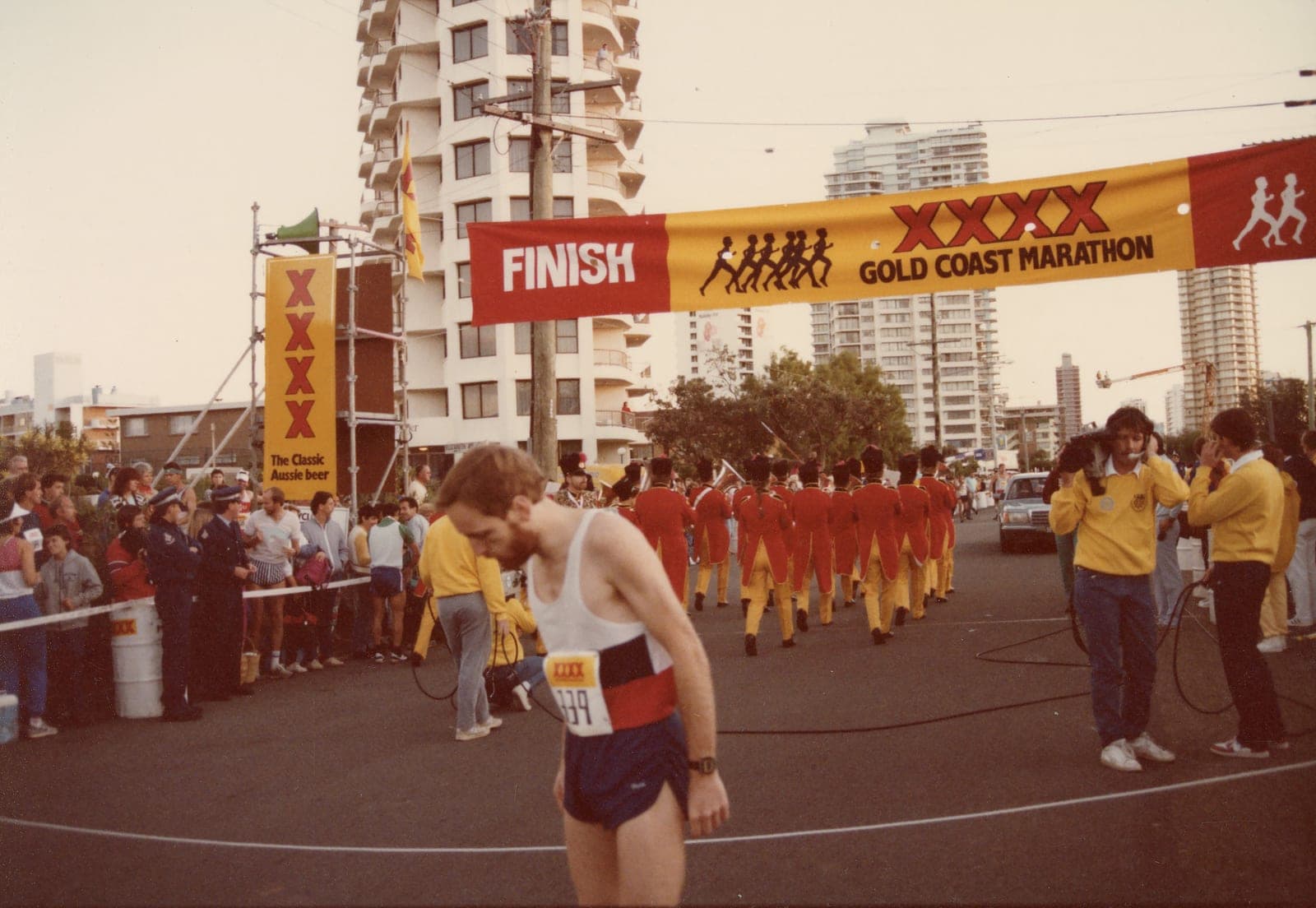
Haftu Strintzos crossed the line on the Gold Coast and fell to the ground. The clock read 2:06:20. In that moment he became the first Australian man in 20 years to win the ASICS Gold Coast Marathon, and the fastest marathoner his country has produced.
The decisive turn
The race held together for a long time. Japan's Hidekazu Hijikata stayed with Strintzos through the early kilometres and beyond, the pair matching each other stride for stride. The break came at the northern turn, at 36.6 kilometres. From there Strintzos pulled clear and did not look back, finishing a full minute ahead of Hijikata, who ran 2:07:20 for second. Jinya Ozaki completed the podium in 2:07:48 on his marathon debut, part of a Japanese contingent that took seven of the top ten places.
Strintzos had a plan and the patience to wait for it. "I felt pretty good by about 30km," he said, crediting the pacers for their work. He and his coach had agreed on a simple instruction before the gun.
"I discussed with my coach Adam prior to the start of the race, depending on how I felt at the 30km mark to just go for it and take my chances and whatever happens, happens."
The winning time carried more than a victory. It broke the course record by 73 seconds, erasing the 2:07:33 that Japan's Yuki Takei had set a year earlier. It also lowered the Australian and Oceania record, taking two seconds off the 2:06:22 Andy Buchanan ran in Valencia in 2024. The last Australian man to win here was Lee Troop, in 2006.
A journey that came full circle
The result did not arrive from nowhere. Weeks earlier, Strintzos had run 1:00:41 at the Launceston Half Marathon, an Australian All Comers record and the fastest half marathon on Australian soil. Before that came a win in the Southern Cross University 10km on the Gold Coast in 2024, and years of steady building at Villanova University in the United States, where he grew into one of Australia's leading distance runners. He had represented his country at the Oceania Championships and the World Cross Country Championships. The Gold Coast marked the point where the promise turned into a national record.
His path to the sport was unusual. Born in northern Ethiopia, Strintzos spent his early childhood as a shepherd before meeting Australian aid worker Maria Strintzos, who adopted him and brought him to Melbourne. He had never run competitively until a primary school teacher pointed him towards Little Athletics. A scholarship to Haileybury College followed. So did everything after.
He lay on his back at the finish, still catching up with what he had done. "It hasn't quite registered yet," he told reporters, calling it a breakthrough moment. For a runner who came to the sport late and far from home, the wait was worth the patience.