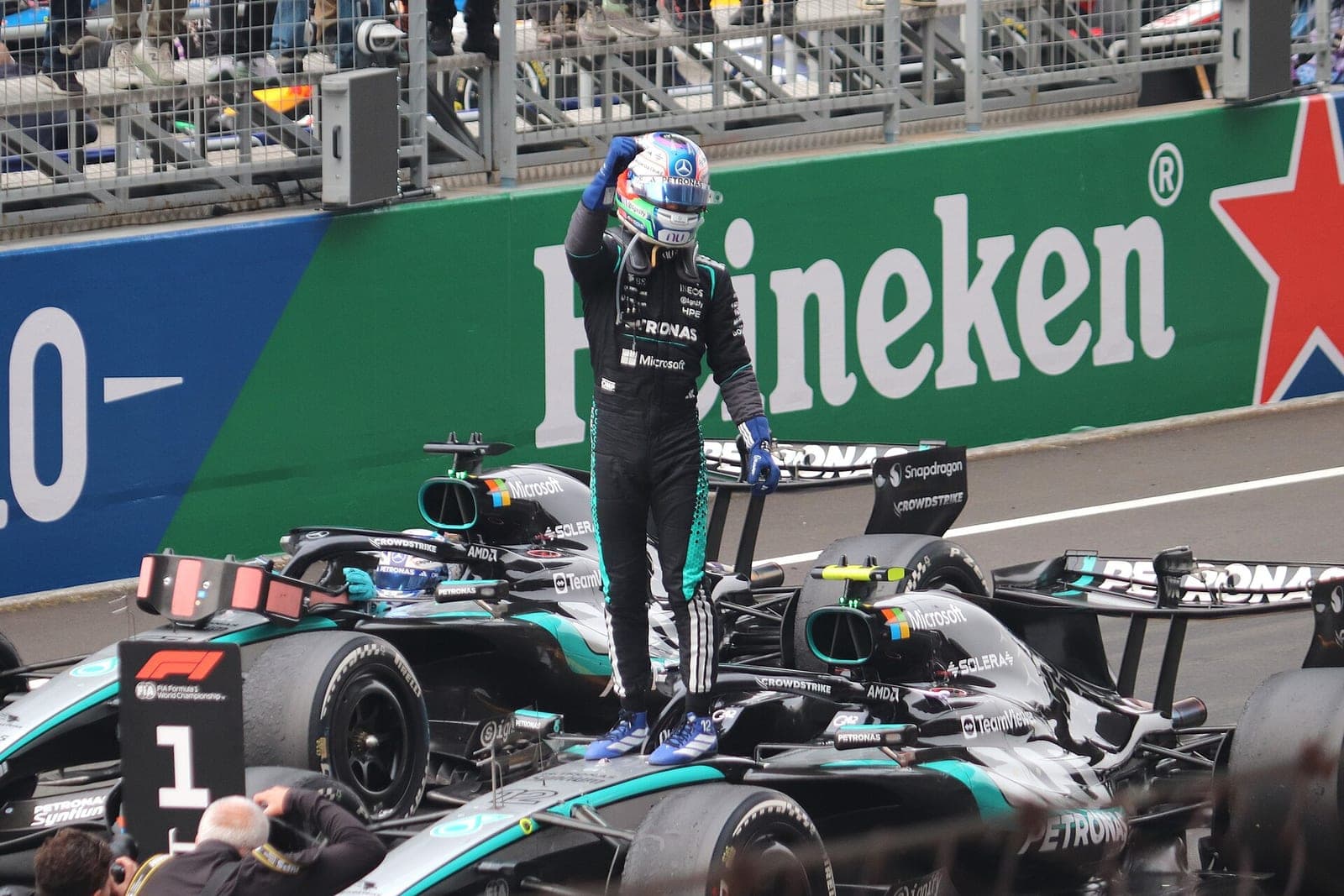

Max Verstappen secured his second Formula 1 world championship in a chaotic, rain-shortened Japanese Grand Prix, a victory that would carry him toward a then-record 15 wins in a single season.
A deluge, a red flag, and a long wait
The race at Suzuka began in heavy spray, with Verstappen barely holding off Charles Leclerc into the first corner after a poor start. Carlos Sainz aquaplaned into a barrier on the opening lap, leaving his Ferrari stranded on track as the field rushed past.
A safety car was deployed, and moments later, the red flag halted the race. A two-hour delay followed as rain continued to fall, with drivers voicing sharp concern over a recovery tractor on the circuit during the yellow-flag period.
Command in the closing minutes
When the skies finally cleared, the race resumed with a rolling start and roughly 45 minutes remaining. Verstappen switched to intermediate tyres and pulled clear immediately, untroubled by the damp track.
He crossed the line 27 seconds ahead of the field, winning a race that lasted only 29 of 53 scheduled laps. Confusion then gripped the paddock over whether full points would be awarded under the regulations.
Full points were eventually confirmed, making Verstappen champion with four races to spare and an unassailable 113-point lead. The win was his 12th of the season, and he would finish the year with 15 victories and a record 454 points.
“The first one is a little more emotional, the second one is more beautiful,” he told reporters afterwards.
The triumph at Suzuka confirmed a changing of the guard. From a teenager who arrived in Melbourne at 17, Verstappen had become the sport's dominant force, with even greater dominance still to come.